
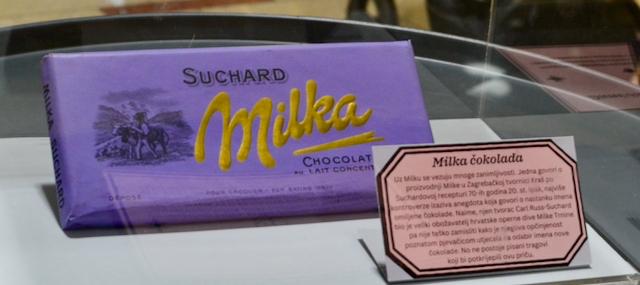
The opera diva Milka Trnina, one of the most celebrated sopranos of her era, often appears in anecdotes about how the Milka chocolate brand got its name. The story goes that the owner of the Suchard company was an admirer of hers and named the brand after her. Attractive as that story is, historical sources and the brand’s official communication point to a different explanation: the name Milka was created by joining syllables of the German words “Milch” and “Kakao”. That is why it is important to separate legend from confirmed facts and to understand how myths are born in the world of branding.
Who was Milka Trnina and why she became a symbol
Milka Trnina (1863–1941) was an internationally acclaimed artist who performed on the greatest stages and worked with the leading conductors of her time. Her career, her work and her philanthropic legacy in Croatian cultural history made her a household name, not only in Croatia but around the world. Such a reputation easily inspired associations with popular products, especially in a period when marketing increasingly relied on personalities and emotional stories.
How Milka came to be: a history of chocolate branding
Milka chocolate was developed within the Suchard company at the beginning of the 20th century, at a time when industrial chocolate production was advancing rapidly. The brand stood out among consumers with its characteristic purple packaging and a consistent visual identity that emphasised Alpine motifs, the softness of milk chocolate and European tradition. In that context, the chocolate branding strategy built an emotional experience of the product, not just functional attributes such as composition or price.
In its early phase, Milka combined several key marketing levers: a strong name, a recognisable colour, the symbol of the cow and a clear promise of taste. Such an approach demonstrates mature brand management: focused messaging, consistency across media channels and careful management of the perception of quality. The consumer is guided not only by taste but also by the story surrounding the brand’s origin, an example of how the country-of-origin effect works in the food industry.
Where the legend of Milka Trnina comes from
The legend was probably born from several overlapping facts. First, “Milka” is a personal name spontaneously associated with the singer, who enjoyed enormous prestige at the time. Second, contemporaries noted that there was admiration for her voice within the Suchard family, fertile ground for narratives that connect branding history with cultural icons. Third, the public often looks for a simple, romantic story that explains the creation of a successful product. Combined with the growing power of the media, such stories quickly take root and become part of collective memory.
What official sources and brand logic say
Despite the charm of the legend, the Milka brand consistently states that the name arose from combining “Milch” and “Kakao”. From a marketing point of view, this is a logical choice: a name that highlights the milkiness and chocolate essence of the product precisely conveys its key value to the consumer. Such a “descriptive-emotional” name makes it easier to launch in multiple markets and forms the foundation of a long-term strategy. When other elements of the identity are taken into account, such as the standardised colour and iconography, it becomes clear that the story being built was not about a famous person but about a sensory experience and trust in quality.
In other words, although it is possible that admiration for the artist motivated individuals within the corporation, this is most likely a legend whose power arose from the coincidence of the name and the social context, and not from a formal decision by the company to name the brand after the singer.
The country-of-origin effect, management and product development
For years, Milka built the perception of “Alpine softness” and purity of ingredients, skilfully using the symbolism of nature, milk and mountains. In doing so, it capitalised on the “country-of-origin effect” and cemented consumer expectations about flavour profile, texture and confidence in production. Such an approach, rooted in the European history of chocolate branding, shows how marketing merges with industrial innovation and logistics chains: from cocoa sourcing to the standardisation of recipes and a controlled presence in the markets.
In practice, this means that brand management is constantly balancing tradition and modernisation – new formats, limited editions, adaptations to regional preferences – without losing the recognisable DNA. The consumer, who makes a decision in a few seconds in front of the shelf, simultaneously weighs taste memory and identity cues: colour, logo, stylistic elements and the language of the message.
The Croatian trace: packaging from Zagreb and chocolate heritage
The history of chocolate consumption in Croatia was also shaped by local production and by trade routes that created global networks from the days of ancient civilisations to today’s industry. In that broader framework, it is worth remembering that Milka left a visible trace in the domestic context as well. The exhibition of the Chocolate Museum Zagreb displays the packaging of Milka chocolate produced in Zagreb, at Kraš, giving visitors a tangible link between the global brand and Croatian industrial tradition. Such museum artefacts make it possible to understand how chocolate branding is refracted through local production, market adaptations and cultural habits – from Zagreb to Dalmatian cities such as Zadar – and how marketing and brand management shape our everyday choice of favourite product.